

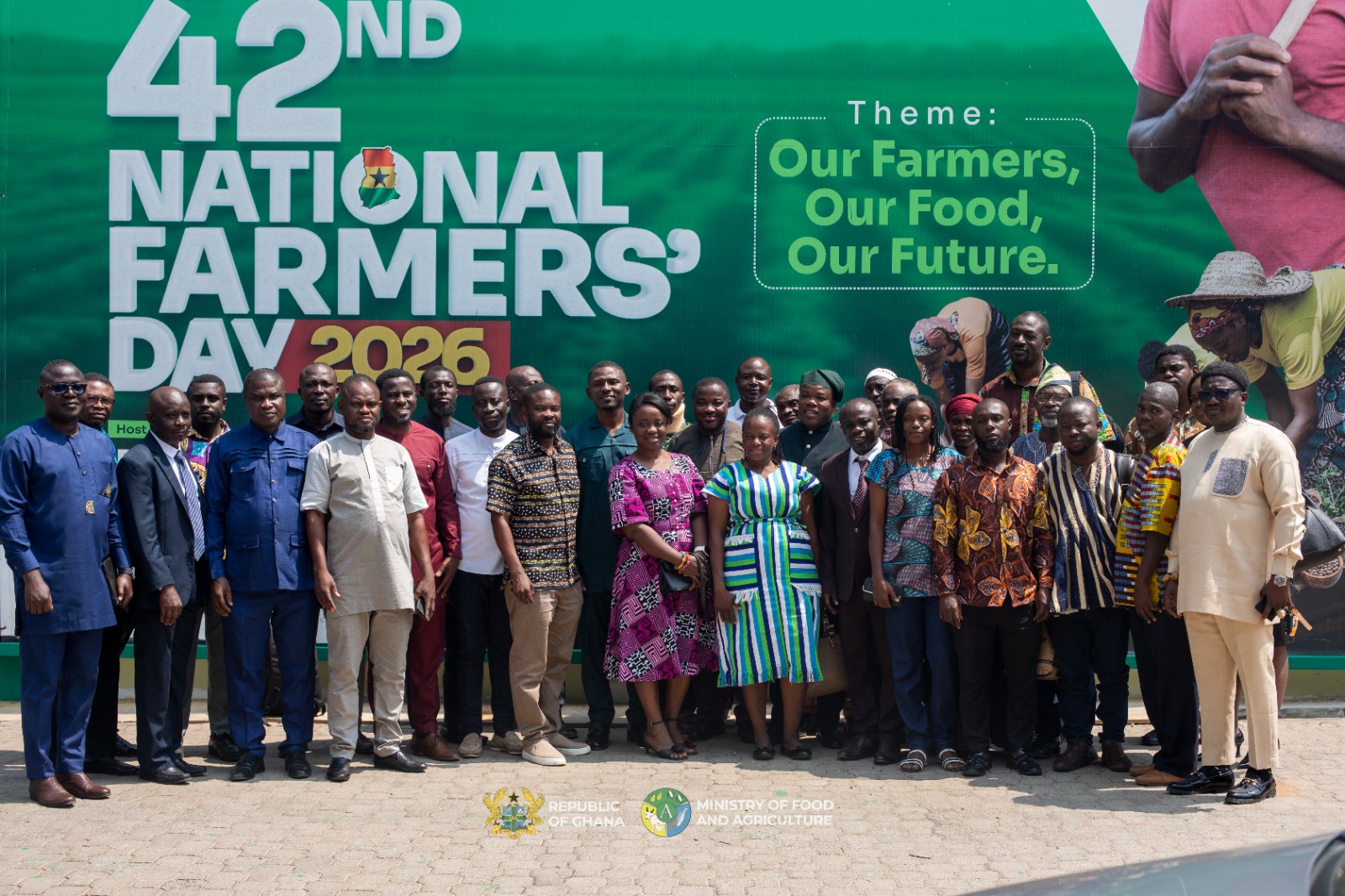
 The Ministry of Food and Agriculture (MoFA) has organized a consultative meeting with key stakeholders in the poultry industry to assess progress under the Nkoko Nkitikiti initiative and identify priorities for its next phase.
The National Stakeholder meeting held on Tuesday, 18th August, 2026 at the Ministry’s Conference Room in Accra, brought together officials from MoFA’s national, regional and district levels, representatives of the Feed Ghana Secretariat, Project Coordinators, executives of the National Poultry Farmer’s Association and other stakeholders across the poultry value chain.
The engagement formed part of the Ministry’s efforts to gather practical input from industry players as the initiative moves from its pilot phase towards full-scale national implementation. Discussions focussed on the progress made so far, challenges affecting implementation and measure needed to improve the programme to reap the targeted impacts.
Strengthening Ghana’s Poultry Industry
Hon. Kwasi Etu Bonde who chaired the meeting said the Nkoko Nkitikiti Initiative was introduced to revitalize Ghana’s poultry industry while creating opportunities for improved livelihoods and contributing to food and nutrition security.
He explained that the initiative is built around three main components
- Household and backyard poultry production to support nutrition and livelihoods
- Small-to-medium-scale commercial poultry farming for farmers with the capacity to rear between 500 and 2,000 birds.
- Large-scale commercial component, known as “Poultry Farm to the Table “, targeting farmers capable of managing more than 80,000-day-old chicks.
From Pilot to National Implementation
The initiative was initially piloted in the five northern regions across 12 districts, where guinea fowls, layers and broilers were distributed to households and commercial farmers.
Following the pilot, President John Dramani Mahama officially launched the nationwide rollout of the backyard poultry component on 13th November 2026 in the Ashanti region.
Under the programme, each district receives 10,000-day-old chicks. The birds are reared for four weeks by experienced service providers, with feed, vaccines and technical supervision provided by the Animal Production Directorate and the Veterinary Services Directorate of the Ministry.
The birds are subsequently distributed to beneficiaries in batches of 50 per household. So far, 11 regions have completed the distribution exercise, with the remaining five northern regions expected to receive their birds in the coming weeks.
Supporting Food Security and Livelihoods
The Coordinator of the Feed Ghana Programme, Hon. Bright Demordzi in a presentation on the status of the programme, outlined the broader objectives of the Feed Ghana Programme, which include strengthening food and nutrition security, reducing Ghana’s dependence on imported meat products and creating sustainable employment opportunities, particularly for women and young people.
The Nkoko Nkitikiti initiative is expected to contribute to these objectives by expanding poultry production at households, small-scale and commercial levels while creating opportunities for farmers and all actors along the poultry value chain.
Market Access Remains a Major Challenge
Market access emerged as one of the key concerns during the stakeholder discussions.
Participants noted that local poultry producers continue to supply only a small portion of national demand, while a significant share is met through imports. They argued that imported poultry which may benefit from subsidies in countries of origin, makes it difficult for Ghanaian producers to compete on price.
Industry representatives therefore called for measures to improve the competitiveness of local producers, including linking import permits to demonstrate local purchases.
Stakeholders also sought stronger institutional markets for locally produced poultry. One proposal was for locally processed poultry to be supplied to schools under School Feeding Programme, building on similar arrangements, the Ministry has piloted with palm oil and dairy producers.
Addressing High Production Costs
The high cost of production was another major issue raised during the meeting, with the cost of feeds identified as one of the main challenges facing poultry producers.
Participants discussed alternative avenues to produce feeds including cassava-based feeds, as well as structured contract farming arrangement that could farmer with reliable and affordable supplies of maize and soya.
The need for accessible small-scale processing equipment and cold storage facilities was also highlighted. Stakeholders noted that, such facilities would enable farmers to add value to their products, improve their market opportunities and reduce post-production losses.
Improving Programme Implementation
Stakeholders also drew attention to some implementation challenges, including delays in payments to service providers and communication gaps between regional and district offices during beneficiary selection distribution.
They recommended that future beneficiary selection be guided by verified community-based farmer registers to minimise disputes, improve transparency and strengthen accountability throughout the distribution process.
Positive Experiences from Beneficiaries
Despite the challenges, stakeholders shared encouraging experiences from the initiative, including cases of beneficiaries who had recorded significant returns within weeks of receiving their birds.
Such experiences, participants noted, demonstrate the commercial potential of poultry farming when farmers have access to quality inputs, technical support, appropriate husbandry practices and reliable markets.
The success stories also reinforced the need to strengthen the programme and address the challenges identified to ensure that more beneficiaries can sustain and expand their poultry enterprises.
Looking Ahead
The stakeholder engagement ended with a commitment to build on the progress made and address the challenges identified as the Nkoko Nkitikiti initiative moves into its next phase.
Representatives of the Poultry Farmers Association, the Animal Production Directorate, agricultural directorates and the Veterinary Services Division agreed to consolidate the recommendations from the meeting into a formal proposal for consideration by the Ministry.
MoFA expresses appreciation to stakeholders for their candid and constructive contributions, noting that their experiences and recommendation would help strengthen the implementation of the initiative and ensure greater impact.