

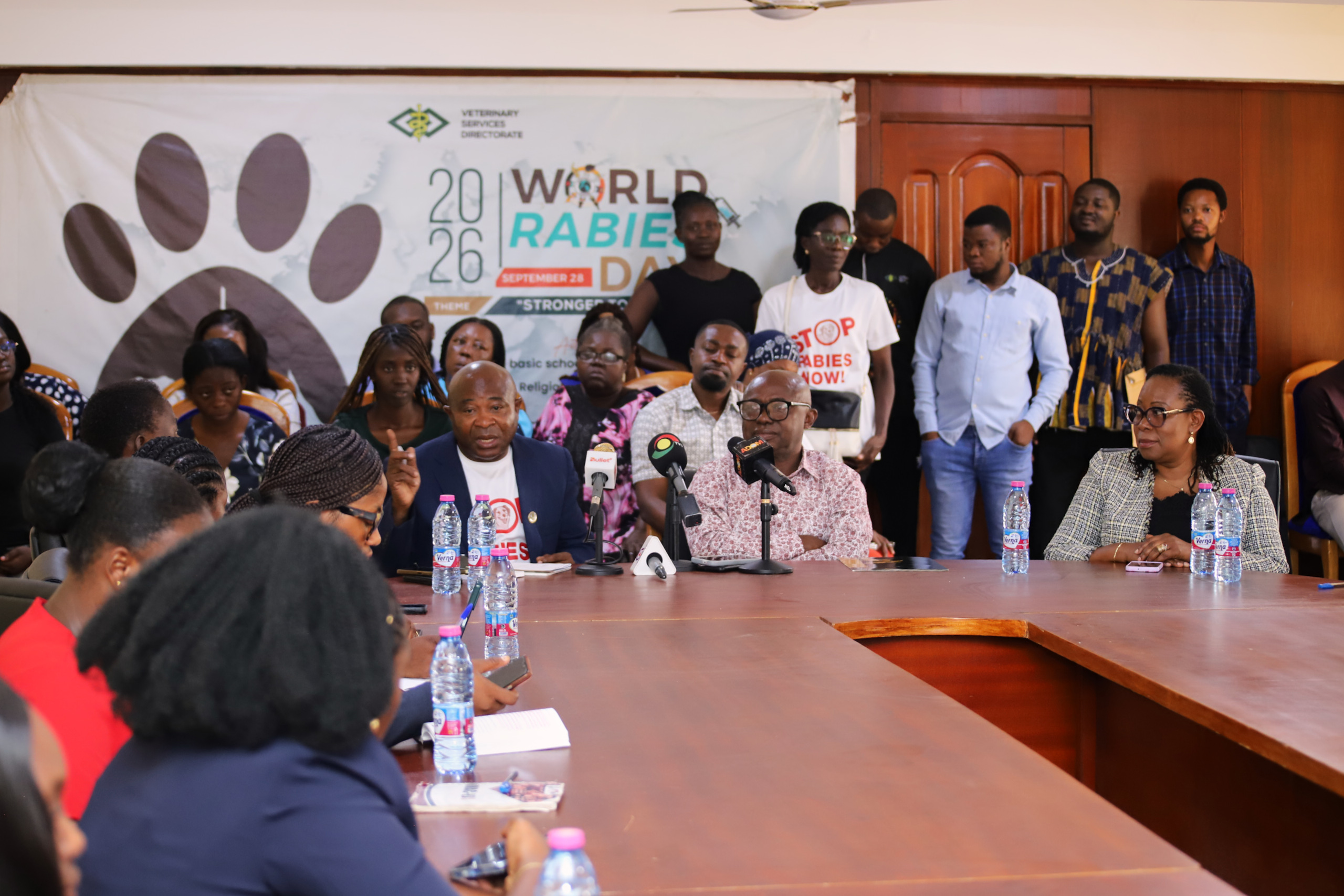
 Ghana has renewed its commitment to eliminating dog-mediated human rabies by 2030, calling on government institutions, veterinary professionals, pet owners, communities, the media and development partners to work more closely together.
The Chief Veterinary Officer, Dr. Emmanuel Allegye-Cudjoe, made the call as Ghana joined the global community to mark World Rabies Day on Monday, 28th September 2026, under the theme "Stronger Together."
Speaking at a media engagement to commemorate the day, he said the theme speaks to the need for collective action, as no single institution or community can eliminate rabies alone.
Prevention Messages Reach Millions
Dr. Allegye-Cudjoe reported that more than 4.8 million people have been reached with rabies prevention and education messages, with the support of international partners. The messages were shared through social and traditional media, and in schools, churches, mosques and communities across the country.
He stressed, however, that awareness must lead to action: vaccinating pets regularly, washing bite and scratch wounds properly, seeking timely medical care, and rejecting harmful myths about rabies.
Nearly 10,000 Pets Vaccinated
Under the free nationwide vaccination campaign running throughout September 2026, 9,456 pets had been vaccinated at the time of the engagement, made up of 8,210 dogs and 1,246 cats.
Following additional support from private veterinary service providers and Metropolitan, Municipal and District Assemblies (MMDAs), the campaign target has been raised to 40,000 pets. The Chief Veterinary Officer urged owners who have not yet vaccinated their animals to do so before the campaign ends.
What the Public Should Do
Dr. Allegye-Cudjoe reminded the public that vaccination remains one of the most effective ways to prevent rabies. He advised dog and cat owners to vaccinate their pets every year and to make use of the designated veterinary centres offering free vaccination this month.
Anyone bitten or scratched by a dog or another potentially infected animal should immediately wash the wound with soap and running water for at least 15 minutes, seek medical attention, and report the incident to the nearest Veterinary Office.
He also cautioned against unproven remedies, stating clearly that kola nut cannot cure rabies and must never replace proper medical treatment.
Working Together
The Chief Veterinary Officer said sustained collaboration is needed among the Veterinary Services Directorate, the Ghana Health Service, MMDAs, civil society organisations, religious and traditional leaders, development partners and pet owners. Educational materials in selected local languages are being distributed to schools, health providers and communities to deepen public understanding of the disease.
He thanked the veterinary hospitals and service providers, development partners, MMDAs, churches, mosques and other stakeholders who continue to support rabies prevention.
He also noted that the Ghana Health Service recently organised a continuous professional development programme for more than 500 health personnel, to strengthen the early management of suspected rabies cases and improve collaboration with Veterinary Services.
"A Vaccinated Dog Is a Protected Child"
Describing rabies as 100 per cent preventable but 100 per cent fatal once symptoms appear, Dr. Allegye-Cudjoe called on all Ghanaians and institutions to renew their commitment to ending the disease by vaccinating pets, educating communities and seeking immediate medical care after an animal bite or scratch.
"My message to every Ghanaian this World Rabies Day is simple: a vaccinated dog is a protected child, a safer community, and a step closer to zero rabies deaths," he said.
He thanked the media for its continued partnership in sharing life-saving messages and appealed for sustained collective action towards Ghana's 2030 elimination target.